will@jinfengvalve.com
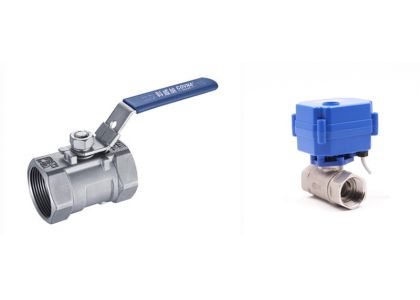
In automation and home water systems, valves serve as critical components for controlling fluid flow. With the advancement of automation technology, the market demand for 3/4-inch motorized ball valves continues to grow.
However, many customers remain undecided between manual ball valves and motorized valves.
This article will outline the performance characteristics and advantages of both valve types to help you make the right choice.
Operation Method
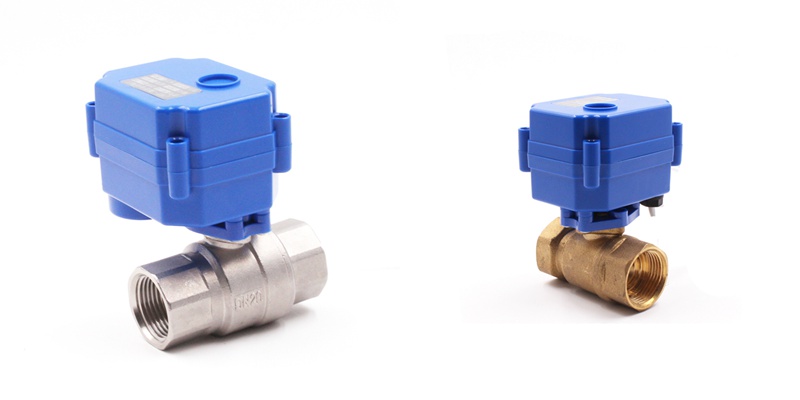
3/4 Inch Motorized Ball Valve
Equipped with an electric actuator, it can be automatically opened or closed via electrical signals. Simple operation makes it suitable for remote control and automated equipment.
Manual Valve
Opened and closed using a handle, it features a simple structure and low cost. Suitable for piping systems that do not require frequent operation.
Application Scenario Comparison
3/4-inch motorized ball valves are suitable for:
Water treatment systems requiring remote control
Water circulation systems
HVAC systems and district heating systems
Applications requiring frequent on/off cycling
Manual valves are suitable for:
Small pipelines or scenarios without frequent on/off cycling
Simple water systems
Service Life and Performance
Motorized Ball Valves
Short switching time, long service life, typically exceeding 100,000 cycles
Can integrate with smart systems to enhance operational efficiency
Manual Ball Valves
Prone to wear under frequent operation
Requires manual operation
Valve Procurement Costs
Manual valves have low procurement costs but incur high labor and maintenance expenses over time.
3/4-inch motorized ball valves feature higher initial procurement costs but reduce labor expenses, making them suitable for medium to large-scale water treatment systems.
Summary
The choice between motorized ball valves and manual ball valves primarily depends on the specific application requirements.
If frequent valve operation is not required, manual ball valves are sufficient.
If the system necessitates remote control, automated control, or frequent switching, 3/4-inch motorized ball valves are the superior option.
This article provides a clearer understanding of the differences between the two types of ball valves, enabling you to make the correct selection.
TIANJIN JINFENG VALVE CO., LTD. is a high-tech enterprise specializing in the production of motorized ball valves and motorized butterfly valves.Operating from a 50,000-square-meter facility, the company features dedicated workshops for injection molding, machining, SMT welding, and advanced assembly lines. Backed by a professional R&D team, we hold multiple technical patents. Our products are certified to ISO 9000:2000, CE, RoHS, NSF 61, and other international standards. Through reliable quality and competitive pricing, we have earned a solid reputation among clients worldwide...[ read more ]





Contact Person: Will Li
Mobile Phone:+8615122298867
WhatsApp:+8615122298867
E-mail:will@jinfengvalve.com
Add:Taibo South Road, Jinghai Economic Development Zone, Tianjin, Jinghai District